

A practical guide to checking opening information and interpreting venue, payment and protection claims around Canberra.
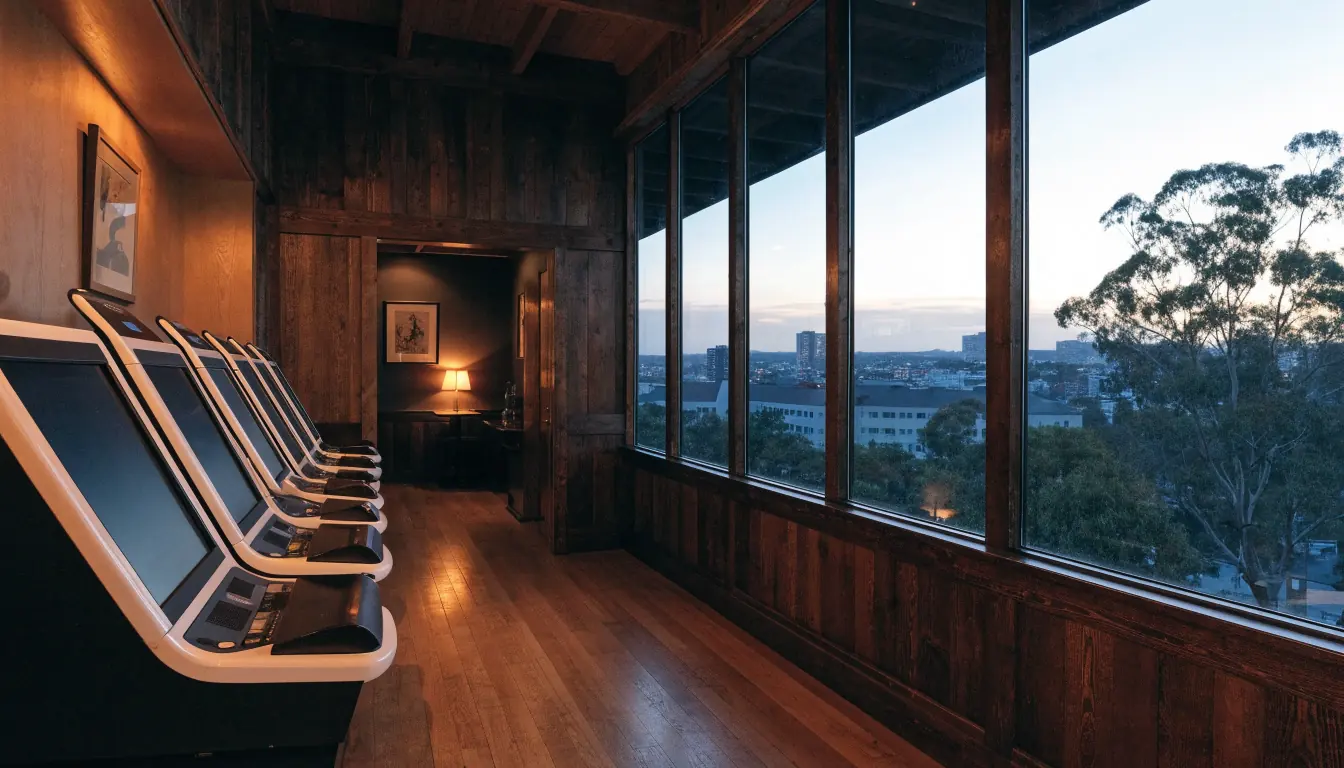
Checking Whether a Canberra Venue Is Open
A result marked “open now” can help you find a starting point, but it is not confirmation that you can enter a particular Canberra venue when you arrive. Opening information may not have been updated, may refer to a different day, or may not reflect a temporary change. Treat it as a prompt to check the venue’s own current information rather than as a reliable answer on its own.
Start with the venue’s official website or its own social media page, if it publishes opening hours there. Check that the details are for the location you intend to visit and for the day you are travelling. A listing can remain visible even if the venue has changed its schedule, so compare the information with a direct call when the timing matters. If you cannot confirm the hours, avoid making a long journey on the strength of a search result alone.
Pay attention to the date attached to any update. A page with no clear date may still be useful, but it gives you less confidence that the hours are current. If a public holiday, special event or seasonal schedule could affect your plans, ask specifically about that day rather than assuming ordinary hours apply. A short call can clarify whether the entrance is open to visitors at the time you expect to arrive.
Be precise about what you are checking. Ask whether the venue itself is open to the public, what its current opening and closing times are, and whether those times differ on the day you plan to go. If you are relying on information from a third-party map or directory, confirm it with the venue before setting out. Different listings can display different details, and a label such as “open” does not explain where the information came from or when it was last checked.

Search wording such as “open early” or “open late” does not establish a schedule. Nor does a result that appears to match a particular morning time confirm that the doors will be open then. If you need to arrive early or leave late, ask for the exact hours for that date. Avoid inferring access from another venue’s schedule or from a general description of Canberra opening times; hours belong to the individual venue and can change.
It also helps to separate a venue’s public opening hours from assumptions about what will be available inside. A sign or listing that says a venue is open tells you about access, not necessarily every service or area. If your purpose for visiting depends on a specific facility being available, ask the venue directly instead of treating the opening-hours result as confirmation. Keeping those questions separate can prevent a wasted trip without relying on guesswork.
There is also a staffing rule relevant while machines are operating. A report published by regionriverina.com.au says that, from 1 July, venues with more than 20 gaming machines are required to have a dedicated responsible gambling officer (RGO) on duty during machine operating hours. This is a requirement tied to the operation of the machines, not a statement of a venue’s public opening time. It therefore cannot tell you whether a particular Canberra venue is open when you plan to arrive.
If you are checking hours by phone, keep the question simple: “Are you open to visitors at this time on this date?” If the answer depends on a particular entrance, room or service, ask that separately. You can also confirm whether the information online is still current. These small checks matter most when your travel plans are fixed or when a late change would leave you with few alternatives.
For a visit that depends on a narrow arrival window, verify close to the time you leave, especially if the information you found is undated or inconsistent. Save the venue’s direct contact details so you can check again if your plans shift. A current confirmation from the venue is more useful than a search label because it addresses the actual date and time you intend to visit.
What “Best-Paying” Can—and Cannot—Tell You
Operators offering no-deposit bonuses
Choosing pokies in Canberra means finding an online casino that fits your preferences and payment needs. Use these verdicts as a concise guide to the details available for each operator.
-
Ricky Casino
- Payout speed
- crypto under 1 hour, PayID 1-3 business days
- Min. deposit
- A$20 (A$30 to qualify for the bonus)
Crypto withdrawals are listed as taking under an hour, while PayID withdrawals take 1–3 business days. The minimum deposit is A$20, or A$30 to qualify for the bonus.
-
SpinsUp
- License
- Curacao Gaming Control Board OGL/2023/174/0082 (Dama N.V.)
SpinsUp is listed with a Curaçao Gaming Control Board licence, OGL/2023/174/0082, held by Dama N.V.
-
Kingmaker
- Payout speed
- crypto ~90 minutes, fiat 1-5 days
- Min. deposit
- A$30
Kingmaker lists crypto withdrawals at around 90 minutes and fiat withdrawals at 1–5 days. Its minimum deposit is A$30.
-
Playfina Casino
- License
- Curacao eGaming (Hollycorn N.V., since 2017)
- Min. deposit
- A$20-30 (depends on the offer)
Playfina Casino is listed under Curaçao eGaming, with Hollycorn N.V. as the operator since 2017. The minimum deposit is A$20–30, depending on the offer.
-
WinSpirit Casino
- License
- Curacao eGaming OGL/2024/923/0383 (Antillephone N.V.)
- Min. deposit
- A$30
WinSpirit Casino is listed with Curaçao eGaming licence OGL/2024/923/0383, held by Antillephone N.V. Its minimum deposit is A$30.
-
Bizzo Casino
- License
- Curacao Gaming Control Board (TechSolutions Group N.V.)
Bizzo Casino is listed under the Curaçao Gaming Control Board, with TechSolutions Group N.V. as the operator.
-
Wild Tokyo
- License
- Curacao
- Payout speed
- crypto 30-60 minutes, fiat 1-5 days
- Min. deposit
- A$10
Wild Tokyo is listed as Curaçao-licensed, with crypto withdrawals taking 30–60 minutes and fiat withdrawals taking 1–5 days. Its minimum deposit is A$10.
-
7Bit Casino
- License
- Curacao, operated by Dama N.V.
7Bit Casino is listed as Curaçao-licensed and operated by Dama N.V.
-
Lucky Dreams
- License
- Curacao
- Min. deposit
- A$20 (POLi)
Lucky Dreams is listed as Curaçao-licensed, with a A$20 minimum deposit when using POLi.
-
SkyCrown
- License
- Tobique Gaming Commission
- Payout speed
- crypto ~10-15 minutes, fiat 1-5 days
- Min. deposit
- A$30
SkyCrown is listed under the Tobique Gaming Commission. Crypto withdrawals are listed at around 10–15 minutes, fiat withdrawals at 1–5 days, and the minimum deposit is A$30.
“Best-paying” sounds like a promise about what will happen when you play, but a stated return percentage cannot tell you what your next session will produce. It is a theoretical measure, not a forecast for an individual. If you are comparing pokies in Canberra, treat a published return figure as one piece of information about a game’s configuration—not as a prediction that you will win, or that one venue will pay you more during a visit.
A specialist review reports that some game providers let casinos choose between different return-to-player, or RTP, settings for the same pokie. As a result, the game’s stated return may differ between casinos. Recognising the title alone is not enough to establish which setting applies where you play. If a figure matters to your decision, check whether the information is specific to that game’s setting at the relevant casino, rather than assuming that a figure seen elsewhere applies to it.
- RTP
-
Return-to-Player is a theoretical measure of the percentage of wagered money a pokie is configured to return to players over extensive play.
RTP describes a theoretical return across play, not a personal repayment rate. It does not mean that a certain share of your own spending will come back to you, nor does it identify when a return might occur. A higher stated RTP may be a useful comparison between settings when the figures are reliable and refer to the exact versions being compared. It does not make an individual outcome predictable, and it should not be read as a promise of better results in a particular session.
That distinction matters when you are weighing claims about the best-paying pokies in Canberra. A headline figure can seem decisive, especially if it is presented without explaining what setting it describes. But the figure cannot tell you how your session will unfold. It also cannot, on its own, establish that one casino or venue will give you a better personal result than another. The setting is a property of the game configuration; your result is shaped by the random outcome of each spin.

Each pokie spin is an independent event determined by a Random Number Generator (RNG). Independence means earlier spins do not set up or change the next one. A run of losses does not make a win due, and a recent win does not mean another is more likely on the following spin. The RNG determines each result separately; a stated RTP does not override that randomness.
This is why a return figure and a sequence of spins answer different questions. RTP describes a theoretical pattern over extensive play, while the RNG determines the result of each individual spin. In your own session, the sequence can differ substantially from the theoretical measure. Looking at recent outcomes cannot reveal that a game is about to pay, and comparing the stated settings cannot remove uncertainty from the next spin.
When you see a return claim, look for its context. Does it name the precise game version and setting, and is it connected to the casino where you intend to play? If not, the claim may be too general to support a comparison. Even a clearly stated setting remains a theoretical measure, not evidence of what you will receive. Avoid treating a percentage as a ranking of venues or as a reason to expect a particular outcome.
Attention: A high stated RTP is a theoretical configuration and not a guarantee of a win or a prediction of results for any individual session.
The same caution applies whether you are considering a Canberra venue or reading about pokies elsewhere. A game’s name and a return figure do not reveal the result of an upcoming spin. If the information is unclear, do not fill the gap with an assumption that the highest-looking figure guarantees the best experience. The useful distinction is simple: settings may vary between casinos for the same game, but every spin remains a separate random event.
Online Pokies and the Limits of Australian Protection
A Canberra-themed search can blur two different questions: whether you can reach an online-pokies service and whether that service is legally authorised to offer real-money play in Australia. Access does not establish legality or protection. The Interactive Gambling Act 2001 makes it unlawful for operators to provide real-money online pokies to people in Australia, and no Australian online-casino licences have been issued.
That means there is no Australian-licensed online casino to turn to for real-money pokies. The law targets the operators rather than individual players, so a person who plays on an offshore site is not subject to a player penalty under this law. That distinction should not be mistaken for an assurance that using an offshore service is safe or that you will be able to recover money if something goes wrong.
The practical risk is what happens when you have a dispute. If an offshore casino refuses to pay winnings, Australian players have no legal recourse in Australia. A site may display terms, customer-service details or claims about its oversight, but those statements do not create Australian legal protection. Before making any decision involving an account, check what identity and address documents the operator requires before a first withdrawal, and read the withdrawal conditions carefully. Even careful preparation cannot guarantee that an offshore operator will pay.

Access can also be interrupted. The Australian Communications and Media Authority (ACMA) enforces the Interactive Gambling Act 2001 and blocks access to illegal offshore gambling sites. Internet service providers must comply with ACMA’s blocklist. A page that opened earlier may therefore become unavailable, and a site that remains reachable is not thereby approved for Australian customers. Nor does a result labelled as a Canberra casino or as online pokies near Canberra establish a local venue, domestic licence or Australian dispute process.
Offers framed around no-deposit play, real-money access or high betting limits deserve the same distinction. Those labels describe an offer or a claimed feature; they do not change the legal position for operators or supply protection if a withdrawal is disputed. Do not treat a bonus as money you can safely count on, or assume that a prominent brand name or polished website means an Australian regulator can resolve a complaint.
The rules also do not turn on whether you are in Canberra, elsewhere in Australia or searching for a particular local area. The relevant point is that the service is offering real-money online gambling to someone physically in Australia. A local-sounding name or location reference does not make an offshore service a Canberra venue.
If a site or payment process raises concerns, stepping back is a reasonable choice. Do not send more money simply because a service says a further deposit will unlock a withdrawal. Keep records of what you have already paid and of the terms presented to you, and contact your bank if you are concerned about a transaction. These steps do not replace legal recourse, which is not available in Australia against an offshore casino that refuses to pay, but they can help you understand what has happened and avoid making a rushed decision.
Legal Risk
Real-money online pokies are unlawful for operators in Australia, and players using offshore sites have no legal recourse in Australia if a dispute arises.
The safest distinction to keep in mind is simple: a service being reachable is not the same as being licensed here, and being outside the law’s focus on operators does not mean you have a remedy if the operator withholds winnings.
Finding a Venue Near the Airport or CBD
If you are looking for a place to play pokies near Canberra Airport, the first task is to establish where a venue is, not how close a search result makes it appear. A listing may use “Canberra” broadly, show a map pin at the edge of a suburb or describe somewhere as near the airport without making clear whether it is on airport grounds or elsewhere in the area. Treat those descriptions as starting points, not confirmation.
Open the venue’s own location information and compare its street address with a current map. Check that the pin matches the address, then review the route from your actual starting point. A straight-line distance can be misleading: roads, entrances and the route you can use may make the trip longer or less direct. If you need to know whether a venue is inside the airport itself, look for an address or directory listing that explicitly places it within the airport, rather than relying on wording such as “airport pokies”.
The same care applies to searches for pokies near Canberra’s CBD. “Near the CBD” is not a precise boundary, and a result may refer to a wider central area rather than a location you would consider walkable from your destination. Check the full address and route, and make sure the map is showing the place you intend to visit rather than a similarly named location or a general area marker.

Searches for North Canberra or for pokies “near me” can also return results beyond the area you have in mind. Location settings may be approximate, and a map can centre on your device, a previous search or a broader Canberra location. Confirm the suburb and address before setting out. If the result gives only a general locality, look for a direct venue contact method and ask for the exact street location.
Wording that includes “Canberra, VIC” should not be treated as proof that the result is in Canberra, ACT. Place names and search labels can be confused or entered imprecisely. Check the state or territory shown with the address, then match it to the map and the destination you mean. If those details do not agree, pause and clarify the location rather than relying on the headline.
Before travelling, save or note the exact address and check that your route leads to that address. If you are meeting someone, share the same location details so you are not each navigating to different map pins. A nearby label, a search result title or a distance estimate cannot by itself establish that a venue is at the airport, in the CBD or in North Canberra. The reliable check is a consistent address and a route that takes you to the place you intend to visit.
Do
- Compare street addresses with a current map
- Check the state or territory of the address
- Verify the route from your starting point
Don't
- Rely on broad terms like "near the CBD"
- Assume a straight-line distance is accurate
- Trust a search label as a final location
What Venue Reporting and On-Site Oversight Mean
When comparing Canberra pokies venues, a welcoming room or a large choice of machines tells you little about how the venue responds when gambling begins to cause concern. Operational oversight is less visible: it depends on staff being present, recognising signs of harm and recording incidents through the required process.
A report by regionriverina.com.au describes a rule requiring venues with more than 20 gaming machines to have a dedicated responsible gambling officer (RGO) on duty from 1 July while those machines are operating. The role is tied to machine operation, not simply to whether a venue is open. If you want to understand how the requirement applies at a particular venue, ask staff whether an RGO is on duty during the period you plan to visit. A clear answer gives you more useful information than an assumption based on the venue’s size or appearance.
The same report describes a requirement for venues to keep a gambling incident register. It is intended to record occurrences, including situations where a patron’s behaviour indicates they may be at risk of, or affected by, gambling harm. In practical terms, this means an incident should be treated as something staff can document and respond to, rather than as a private matter that has no place in venue operations.
A register is not a public scorecard, and its existence cannot tell you how often incidents occur or how effectively a particular venue handles them. It is a record-keeping safeguard. If you are assessing a venue, you can ask how staff respond when someone appears distressed or unable to step away, and how they involve the RGO. You do not need to disclose personal details to ask about the process.

This distinction matters if you are trying to identify the best pokies venue in Canberra. “Best” cannot be established from machine choice or a search result alone. Oversight is one practical consideration, but a stated procedure is not the same as knowing how it works in every situation. Notice whether staff can explain who is responsible and what happens after a concern is raised. If the answer is unclear, that is useful information for your decision; it does not prove that an incident has been mishandled.
These safeguards also have limits. An RGO’s presence and an incident register do not remove the risks of gambling, and they cannot guarantee that harm will be prevented. They are venue-level responsibilities that support a response when concerns arise. If you are considering pokies venues in Canberra, treat them as part of your assessment of how a venue manages its operations, rather than as a promise of a risk-free experience.
Why “24-Hour Pokies” Needs a Venue-Specific Check
A claim that pokies are available around the clock needs to be checked against the particular venue, not treated as a Canberra-wide rule. A phrase such as “open now” does not establish that a venue provides access at every hour, and a general listing may not reflect a recent change. If round-the-clock access matters to your plans, confirm the hours with the venue directly and ask whether those hours apply to the area where the pokies are located.
A venue being open does not necessarily mean that its pokies area is accessible; operating arrangements can differ between different areas of a venue.
Keep the distinction between a venue being open and its pokies being available. A venue may have different operating arrangements for different areas, or its information may have changed since a listing was updated. Read any published hours carefully: they may describe the venue overall rather than access to the pokies. If the wording is unclear, contact the venue before travelling rather than relying on a search result or an old sign.
“Twenty-four-hour” wording can also appear in material that has not been updated. That matters because operating requirements can change, and signs may not be removed immediately when a venue’s arrangements change. A report by regionriverina.com.au described a one-month grace period for venues to remove signage and introduce responsible gambling officers. Treat that as a reported transition period, not proof that a particular Canberra venue currently operates all day or that its signage is current.
For a practical check, look for information issued by the venue itself and confirm the date it was updated. If you call, ask specifically whether the pokies are accessible at the time you intend to visit, rather than simply asking whether the venue is open. If staff cannot confirm, treat the hours as uncertain and make another plan. A directory entry, map label or sign can help you identify what to ask, but none alone confirms current access.
Do not assume that a venue described as “24-hour” has unchanged arrangements simply because the phrase remains visible online or on site. The wording may refer to the venue generally, may be out of date, or may not clarify access to the pokies. A direct, current answer from the venue is the useful check; without one, the claim should not be taken as confirmation of overnight availability.
Claims About Crown Casino in Canberra
A result that pairs Crown with Canberra should be treated as a claim to check, not confirmation that a Crown venue operates in the city or that its pokies are available there. Search listings can repeat outdated, incomplete or loosely matched information. Before making plans around a named venue, look for current information from an official venue source and confirm directly with the venue. A name or photograph in a listing is not enough to establish that the location, facilities or gaming area are as described.
The same caution applies to requests for Crown pokies in Canberra or for the best pokies room there. Those phrases do not show that a particular room exists locally, how it is set up, or what machines it contains. Avoid relying on promotional descriptions or user posts as proof. If you do identify a venue through reliable, current information, check its own details before travelling and ask staff about facilities you need to confirm. No recommendation can responsibly be made from a name alone.
If your interest is a particular pokie, confirm its presence with the venue rather than assuming a game listed elsewhere is available there. Machines and offerings can differ between locations, and a page about another city may appear in results for Canberra. Check the location attached to the information and whether it has been updated. If the venue cannot confirm the details, treat them as unknown rather than planning around them.
Attention: Maximum payouts depend on the specific machine and its rules; do not assume a payout limit based on a venue's name or general description.
A separate question is how much a pokie can pay out in cash. There is no single maximum that can be assumed from a venue name or a general description of its gaming room. The amount may depend on the specific machine and its stated rules. Before playing, read the machine information and ask venue staff to explain any payout conditions you do not understand. Do not rely on a figure copied from a different venue, machine or online listing.
It is also worth separating a payout limit from the amount you might win on an individual play. Neither a room’s reputation nor a claimed maximum tells you what will happen. Set a spending limit before you begin, and step away if continuing would mean exceeding it. If you cannot confirm the venue, machine or payout terms clearly, waiting until you can is safer than treating an unverified claim as settled.
Clubs and Gambling Safeguards in the CBD
If you are considering pokies at a Canberra club, decide what boundaries you want before you arrive. A club setting can make it easy to keep playing longer than planned, so it helps to choose a spending limit and a stopping point while you are still clear-headed. Neither a venue’s location nor the machines it has can tell you whether playing will fit your circumstances.
Responsible-gambling tools include deposit limits, loss limits and session time limits. These controls work in different ways: a deposit limit caps what you put in, a loss limit sets a boundary on what you are prepared to lose, and a time limit helps bring a session to an end. Check which options are available and how they take effect before relying on one. A limit is useful only if you understand what it covers and can keep to it.
Self-exclusion is another option if you want a stronger break from gambling. It is a way to step away rather than simply setting a smaller budget. Ask the relevant venue how its process works, what access it covers and what you need to do to put it in place. Do not assume that an arrangement at one venue automatically applies elsewhere.
It may also help to decide in advance what you will do when your chosen limit is reached: leave the gaming area, contact someone you trust, or make a plan to get home. Avoid treating a limit as a target to extend after a loss or a win. If you find yourself changing the boundary repeatedly, that is a reason to pause and consider stepping away.
For anyone comparing clubs in central Canberra, focus on whether the safeguards are clear and usable, not on a claim that one place has the “best” pokies. You can ask staff where to find information about limits or self-exclusion before you begin. If you would rather not gamble, leaving the area is a valid choice; you do not need to wait until a session feels difficult to stop.
These measures cannot guarantee a particular outcome, but they can help you make decisions before the pressure of play sets in. Choose the tool that matches the boundary you need, and take a break if keeping to it becomes hard.
- Choose a spending limit
- Set a clear stopping point
- Determine which limit tool to use (deposit, loss, or time)
- Plan an action for when the limit is reached
Parkes Searches: What Can Be Confirmed
If you are looking for pokies around Parkes in Canberra, treat a place name in a listing as a starting point, not confirmation of what is available at a particular venue. Search results can refer to different locations or use broad descriptions. Check the venue’s own current information before relying on a listing, and contact it if the details you need are unclear. A result’s wording does not establish which machines are on site or whether a particular game is available.
The same applies when you are comparing options described as the best pokies in Canberra. “Best” is a judgement, not a detail you can verify from a heading alone. Look for specific, current information about the venue rather than assuming that a page mentioning Parkes confirms its offerings. If the information is vague, do not treat it as a promise.
It can also help to decide in advance what boundaries you want to keep, wherever you choose to gamble. Deposit limits can restrict how much you put in; loss limits can set a ceiling on losses; and session time limits can help you decide when to stop. These tools address different parts of a gambling session, so consider which ones fit the boundary you want to set.
Self-exclusion is another option if you want to prevent yourself from gambling at a venue or service covered by the arrangement. It is a more substantial step than setting a limit, so check what the exclusion applies to and how it works before relying on it. A tool only helps if you understand its scope and use it before you are caught up in play.
No location label can make these decisions for you. If you cannot confirm what a venue offers, avoid filling in the gaps with assumptions. You can still choose your own limits—or step away—without first settling whether a particular Parkes listing deserves a “best” label.

Cashless Payment Searches and the Newcastle Mix-Up
A reference to Newcastle alongside Canberra does not confirm that a particular venue, pokie or payment option is available in either place. Treat those place names as separate location details to check, not as evidence that the same arrangements apply across both cities. For a Canberra venue, ask the venue directly whether it accepts cashless payments and what payment methods are supported. A general description of PayID cannot answer that venue-specific question.
PayID is an alias service built on the New Payments Platform. It lets a person send a transfer using an email address, mobile number or Australian business number instead of entering the recipient’s bank details. The alias is a way to direct a bank transfer; it is not, by itself, a gambling payment service or proof that a venue accepts the transfer.
Bank policies can affect whether a payment goes through. A specialist review has reported that some Australian banks, including major banks, sometimes block PayID transfers to gambling merchants they identify. A declined or delayed transfer may therefore reflect a bank’s controls, rather than establish anything about the recipient. Check with your bank if you need to understand a particular restriction; do not keep trying different routes simply to get around a block.
Most importantly, a payment method tells you nothing by itself about a gambling service’s licensing, fairness or transparency. PayID support does not certify a service or show how a game is configured. Nor does the fact that PayID is available as a transfer method establish that cashless play is offered at a Canberra venue.
If you are comparing payment options, keep the questions separate: what the venue accepts, what your bank permits, and whether the activity itself is lawful. A payment mechanism can answer only the first two when confirmed by the relevant provider; it cannot stand in for checks about the service.
Are online pokies legal for Australian players?
Yes, Australians can play on offshore sites that accept them, but companies cannot legally offer real-money online pokies to Australian residents without a domestic licence, and none have been issued. If an offshore casino refuses to pay you, you have no legal recourse in Australia.
Can casinos change the RTP of their games?
Some game providers let casinos select from different RTP settings for the same pokie, so the return percentage can vary between casinos. Check the setting for the specific game at the casino you are considering.
What is the cost-benefit calculation of casino promotions?
Check the wagering requirement and what it applies to before accepting a bonus. For example, a $500 bonus with 40x wagering requires $20,000 in bets; at 35x on a $500 deposit plus a $500 bonus, it requires $35,000.
What is the minimum PayID deposit?
Most operators set minimum deposits at AU$10–AU$20, while some accept AU$5. PayID is treated like other qualifying deposit methods, so check the minimum shown by the site.