

The term can describe a physical gaming venue or appear in an online service’s wording, but it does not establish a casino’s regulatory status.
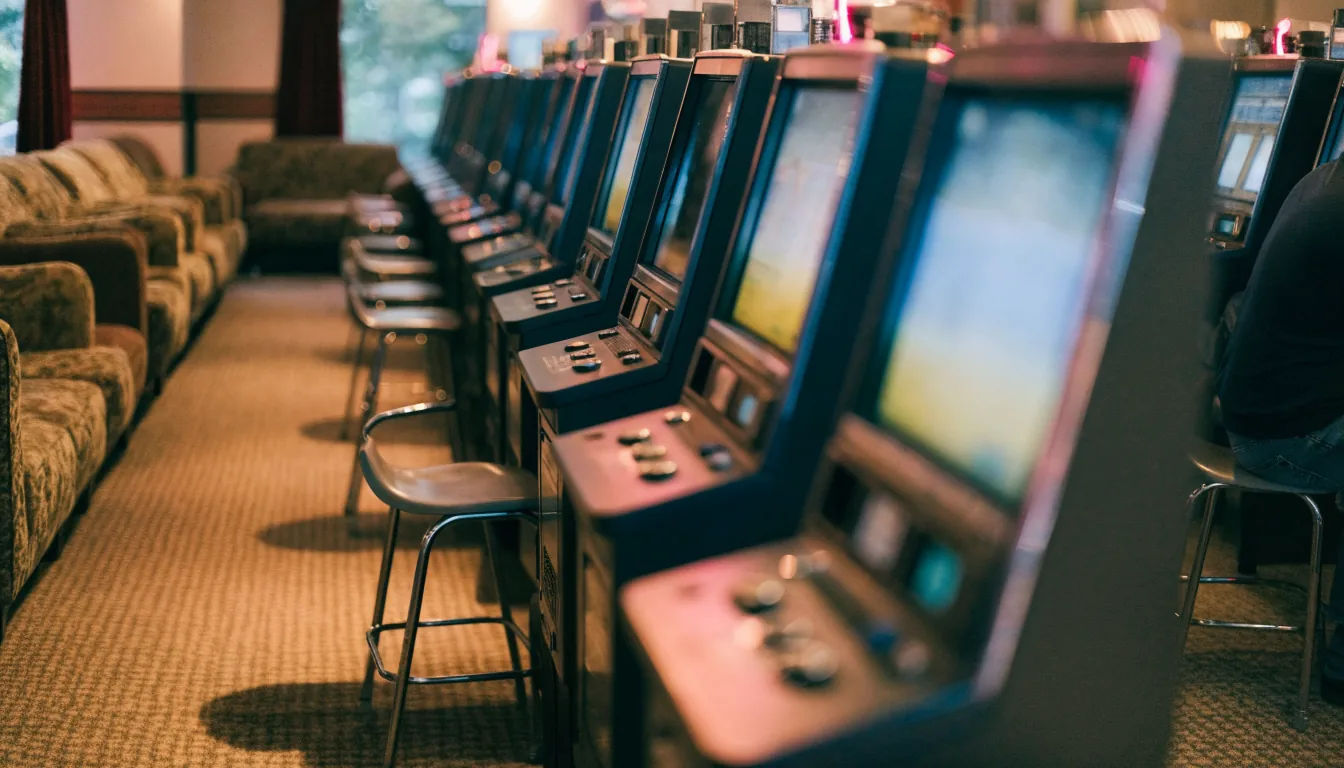
What “Pokies Parlour” Means in Australia
“Pokies parlour” is an informal phrase, not a distinct Australian casino licence category. Depending on where you encounter it, it may refer to a physical gaming venue, or simply be wording used by a website. If you are looking for a place to visit, the phrase can point you towards a land-based casino. If it appears in the name or description of an online service, that wording alone tells you nothing about whether the service is authorised to operate in Australia.
The distinction matters because the two settings are governed differently. Australian casinos are physical properties licensed by the state or territory in which they operate. Each jurisdiction is responsible for the licence attached to a property, so a casino’s local regulatory status is not established merely by a generic label such as “parlour.” A description on a web page is not a substitute for the venue’s actual identity or the rules that apply where it is located.
The scale of the land-based sector is substantial, but figures describing it should be read with care. A specialist review puts the number of full-scale casinos at more than 20 across Australia’s eight states. Treat that as a count reported by that kind of review, rather than a permanent official total: venues and classifications can change, and different sources may count them differently. It is enough to show that casino venues are spread across the country, without suggesting that every state or territory has the same number or type of facility.
Operators offering no-deposit bonuses
If you’re looking at pokies options for Australia in 2026, check the practical details that matter to you before choosing where to play. This list gives you a concise reference point for the available operator information.
-
Ricky Casino
- Payout speed
- crypto under 1 hour, PayID 1-3 business days
- Min. deposit
- A$20 (A$30 to qualify for the bonus)
If you prefer crypto withdrawals, Ricky Casino lists payouts in under an hour; PayID withdrawals take 1–3 business days. You can deposit from A$20, though A$30 is required to qualify for the bonus.
-
SpinsUp
- License
- Curacao Gaming Control Board OGL/2023/174/0082 (Dama N.V.)
SpinsUp lists a Curacao Gaming Control Board licence, OGL/2023/174/0082, held by Dama N.V. This gives you a specific licensing detail to consider.
-
Kingmaker
- Payout speed
- crypto ~90 minutes, fiat 1-5 days
- Min. deposit
- A$30
Kingmaker lists crypto payouts at around 90 minutes and fiat payouts at 1–5 days. Its minimum deposit is A$30.
-
Playfina Casino
- License
- Curacao eGaming (Hollycorn N.V., since 2017)
- Min. deposit
- A$20-30 (depends on the offer)
Playfina Casino lists a Curacao eGaming licence held by Hollycorn N.V., with the licence dating from 2017. The minimum deposit is A$20–30, depending on the offer.
-
WinSpirit Casino
- License
- Curacao eGaming OGL/2024/923/0383 (Antillephone N.V.)
- Min. deposit
- A$30
WinSpirit Casino lists Curacao eGaming licence OGL/2024/923/0383, held by Antillephone N.V. You can deposit from A$30.
-
Bizzo Casino
- License
- Curacao Gaming Control Board (TechSolutions Group N.V.)
Bizzo Casino lists a Curacao Gaming Control Board licence and names TechSolutions Group N.V. as the operator. That licensing information is the key detail available for your consideration.
-
Wild Tokyo
- License
- Curacao
- Payout speed
- crypto 30-60 minutes, fiat 1-5 days
- Min. deposit
- A$10
Wild Tokyo lists crypto payouts in 30–60 minutes and fiat payouts in 1–5 days. Its minimum deposit is A$10.
-
7Bit Casino
- License
- Curacao, operated by Dama N.V.
7Bit Casino is listed as operating under a Curacao licence, with Dama N.V. named as the operator. This is the main available detail to help inform your choice.
-
Lucky Dreams
- License
- Curacao
- Min. deposit
- A$20 (POLi)
Lucky Dreams lists a Curacao licence and a minimum deposit of A$20 when using POLi. Check whether that deposit option suits you.
-
SkyCrown
- License
- Tobique Gaming Commission
- Payout speed
- crypto ~10-15 minutes, fiat 1-5 days
- Min. deposit
- A$30
SkyCrown lists a Tobique Gaming Commission licence. Crypto payouts are listed at around 10–15 minutes, fiat payouts at 1–5 days, and the minimum deposit is A$30.
Australia’s larger casino properties operate around the clock. That does not mean every service, entrance or area within a property is necessarily available at every hour. If you are planning a visit, the venue’s own current information is the practical place to confirm arrangements. The general point is that a casino is a physical, locally licensed operation, not simply a website that uses familiar casino language.
The phrase can also create confusion because “pokies” is a familiar Australian term associated with gaming machines. In everyday wording, a “parlour” may sound like a small, separate room or an independent establishment. It should not be taken as a reliable description of a venue’s size, its facilities, or the conditions under which it operates. A physical casino may include several kinds of spaces and services, while the wording in an advertisement or online listing may be broad or informal.
For that reason, separate the name used in a listing from the facts that identify a venue. A physical address, the property’s recognised name and the responsible state or territory are more useful than a phrase that could be applied loosely. This is not a review of any particular venue, and the term itself does not establish what a visitor will find inside. It simply signals a possible connection to casino-style gaming and needs context before you rely on it.

The same caution applies when the phrase is attached to an online page. A polished site, a familiar Australian expression or an address that loads in your browser does not make an online casino locally licensed. Under the Interactive Gambling Act 2001, operators are prohibited from providing real-money online casino-style gambling to people in Australia. That includes online casino games such as poker and table games. The law concerns the service offered to people physically in the country, not whether its website borrows the language of a land-based venue.
This is why the words “pokies parlour casino Australia” should be read as a description someone has chosen, not as a regulatory credential. An online operator cannot establish local authorisation by calling itself a parlour, by referring to Australian customers, or by presenting a casino-like appearance. Nor does the phrase prove that a web service has any connection to a licensed physical property. If your intention is to visit a venue, look for information about the actual property and its jurisdiction. If you are looking at an online service, do not treat its wording as evidence that it may lawfully provide real-money casino games in Australia.
In short, “pokies parlour” may lead you to information about a real casino, but it is not a formal category that settles what a place is or what an online operator is allowed to do. Keep the physical venue and the online label separate. That simple distinction helps prevent an informal phrase from being mistaken for a licence, a guarantee, or a description of the service you will actually encounter.
Legal Warning
Under the Interactive Gambling Act 2001, operators are prohibited from providing real-money online casino-style gambling to people physically located in Australia.
Bonus and Sign-Up Claims: What the Rules Mean for You
A “no-deposit” sign-up offer can sound as though you may open an account and receive something without paying in. A general bonus claim may be less specific, but it can create the same impression: that an online casino is ready to welcome Australian customers and that its promotion is a reason to register. Neither implication establishes that the service can lawfully be provided in Australia.
The Interactive Gambling Act 2001 prohibits operators from offering real-money online casino services to people physically located in Australia. A welcome offer, a no-deposit claim or other promotional wording does not change that legal position. Nor does a promotion make an online casino authorised for Australian customers. Treat claims of this kind as advertising, not as evidence of lawful local availability.
This distinction matters because a polished page can make a promotion look routine. It may describe a bonus as a gift, a registration reward or a way to try a service. Those labels do not determine whether the underlying offer is permitted. The relevant question is not how the operator presents the promotion, but whether the service being advertised may be offered to people in Australia.
What a promotion can—and cannot—tell you
A sign-up claim can tell you that a website is trying to attract registrations. It cannot establish that the operator has an Australian licence for online casino activity. A page may look locally tailored, accept details from an Australian visitor or show promotional terms in familiar language; none of those features changes the law applying to the service.

The same caution applies to “no deposit” wording. It may be used to suggest that a person can register without an initial payment, but the phrase does not make the offer lawful or remove the risks of handing personal information to a site. Before entering details, pause over what the page is asking you to do and what service sits behind the advertisement. Do not treat the prospect of receiving a bonus as reassurance about either point.
This is not a judgement about whether a particular offer is generous or worthwhile. Promotional value is beside the central issue: Australian law prohibits operators from providing real-money online casino games to people in the country. An inducement cannot turn a prohibited service into an authorised one, and promotional terms cannot override the law.
ACMA’s role in enforcement
The Australian Communications and Media Authority (ACMA) is the federal regulator responsible for enforcing the Interactive Gambling Act 2001 and monitoring compliance with federal interactive gambling rules. Where a service provides prohibited online gambling or advertises it to Australians, ACMA can investigate and take enforcement action.
One available measure is to ask Australian internet service providers to block access to websites that provide prohibited interactive gambling services or advertise them in Australia. A block is an enforcement step; it is not a consumer rating, and it does not mean that every site a person can reach is lawful. Equally, an advertisement’s continued appearance is not proof that it has been approved.
Do
- Treat bonus claims as advertising
- Use ACMA's material for regulatory info
- Separate advertising from legal status
Don't
- Use bonuses as evidence of legality
- Provide personal details based on offers
- Rely on affiliate descriptions for verification
ACMA reports that its enforcement actions have led to the blocking of more than 1,455 illegal gambling and affiliate websites since November 2019. That record gives useful context for bonus advertising: promotional pages and sites connected with prohibited services have been among the material subject to enforcement. It is a reason to approach claims carefully, not a reason to assume that a particular site has been reviewed or cleared.
There is also a reported discrepancy in the count of services that have left the Australian market after enforcement began in 2017. One figure says more than 210 services withdrew; another says more than 190. The broader point is that enforcement has prompted services to withdraw, while the figures reported for that outcome differ.
Why changing wording does not settle the issue
A promotion may avoid the word “bonus” and instead describe a reward, a welcome benefit or a registration incentive. The wording can change, but it does not decide whether the advertised service is permitted. If a claim directs you towards a real-money online casino service, the central legal question remains the same regardless of how the inducement is labelled.

Likewise, a bonus page may include conditions or formal language that makes the offer appear carefully regulated. Such detail is not a substitute for Australian authorisation. Do not infer that an offer is approved because it has extensive terms, appears on a professional-looking website or is repeated by an affiliate publisher. A publisher’s description is not an ACMA decision.
It can also be difficult to tell from an advertisement which business is actually making the offer or providing the service. A referral page may send visitors elsewhere, while the promotional claim itself gives little attention to the operator behind it. That is another reason not to treat an affiliate write-up as verification. ACMA’s blocking record includes affiliate websites as well as gambling websites, but no general statement about enforcement proves the status of every page or operator.
A measured response to bonus claims
If you encounter a no-deposit or sign-up promotion aimed at Australian users, do not let the offer be the reason you provide personal or payment details. First separate the advertising claim from the legal status of the service. The wording may be designed to make registration feel low-risk; it cannot create a lawful exception for online casino services.

For regulatory information, use ACMA’s own material rather than relying on promotional copy or a third party’s interpretation. ACMA’s website explains its enforcement role and provides information about the Interactive Gambling Act 2001. Keep in mind that a regulator’s general guidance is not an endorsement of a particular advertisement, and the presence or absence of a notice about a site should not be treated as individual approval.
A restrained approach is especially useful when an offer creates urgency or encourages you to act before considering what you are signing up for. You do not need to decide whether a claimed reward is attractive. The more important point is that an incentive does not change the rules governing the service behind it. A bonus is a marketing claim, not proof of Australian legality.
Can You Play Pokies Parlour Games Online or for Free?
Searching for a way to play from home is different from looking up a venue to visit. In Australia, “pokies parlour” may be used loosely online, but a website using that phrase is not the same thing as a physical gaming venue. Nor does an online page, playable screen or sign-up flow show that the service is authorised to provide casino games to people in Australia.
An accessible website, an account option, or a free-play label cannot establish Australian authorisation for online casino services.
The legal distinction matters. Under the Interactive Gambling Act 2001, it is illegal for operators to provide real-money online casino games to people physically located in Australia. This includes online casino-style games such as slots, poker and table games. The restriction concerns the operator’s conduct; a site appearing to load does not change the law or establish that its service is permitted.
What a working website does—and does not—tell you
A page may open, let you create an account or accept account traffic. None of those things proves Australian licensing. An operator may also present an alternate domain if another address stops resolving. A new address is not evidence that the service has become lawful or that its status has been checked by an Australian regulator.
This can be confusing because access is not consistent. Website blocking can affect whether a domain resolves through an Australian internet service provider, and alternate addresses may appear over time. A failed page does not, by itself, tell you why it is unavailable; a working replacement address does not demonstrate approval. Treat changes in access as a technical detail, not as a sign of legitimacy.
The Australian Communications and Media Authority (ACMA) enforces the Interactive Gambling Act and can ask internet service providers to block access to sites offering prohibited interactive gambling services or advertising them. ACMA has taken blocking action against illegal gambling services, including alternate domains associated with Fair Go. A specialist review has also reported changes in domain availability and blocking activity; such reporting describes a shifting web environment, not a licensing register. Do not infer that an alternate address is safe because it loads, or that an inaccessible address has simply moved.

“Free play” is still an online-access question
A free-play page may not ask for a payment to begin, but the word “free” does not settle what the service is, who operates it or whether it may lawfully be offered to Australian users. Some pages may be demonstrations; others may sit alongside account features or lead into a wider service. The label alone cannot establish the distinction.
If you are trying to find free online play, check what the page actually provides and whether it asks you to register or supply personal or payment details. Do not treat a no-cost starting point as proof that later activity will remain free, or that the operator is authorised. This is not a recommendation to proceed; it is a reminder that a promotional label and technical access are not regulatory checks.
Free online access is also separate from free entry to a physical venue. If you intend to visit a casino, that is a real-world venue question, not evidence that an online version is permitted. Keep the two separate when assessing what a page is offering.
If you are uncertain about a site, rely on information from ACMA and the legislation rather than the site’s own claims or a replacement web address. The practical point is simple: an accessible website, an account option or a free-play label cannot establish Australian authorisation.
Attention: A changed web address or the use of an alternate domain does not indicate a change in legal status or regulatory approval.
Free Chips and Spins: Check What the Offer Actually Means
“Free” can describe very different things on a casino-style website. Free chips might mean a balance shown in an account, while free spins may refer to turns on a game. Free play could mean a demonstration with no cash involved. Those labels do not tell you, by themselves, what is being offered or whether the activity is lawful in Australia.
Start by separating the wording from the substance. Does the page describe a no-money demonstration, or does it invite you to create an account and take part in online casino-style games? Is the apparent free offer tied to depositing money, sharing personal details or accepting other conditions? A bold “free” label may sit beside terms that materially change what the offer involves. Read the full description rather than relying on a banner or button.
The word can also obscure what you can actually do with a displayed credit or result. A number shown on screen is not necessarily cash, a withdrawable balance or a promise of a payment. Likewise, a reference to spins does not establish that they are available without other requirements. If the terms are unclear, contradictory or difficult to find, treat the claim as unclear—not as proof that you will receive something with no cost or conditions.

This is not just a question of whether an offer seems worthwhile. Under Australia’s Interactive Gambling Act 2001, operators cannot provide real-money online casino-style games to people in Australia. A “free” label does not change the nature of a service if it is part of prohibited online casino gambling. Nor does it establish that a site is authorised to provide casino games to Australians.
Be cautious about pages that use free chips or spins to draw you into an account, or that present a casino-style game as harmless without explaining what happens next. Do not assume that a trial label, a free balance or an invitation to continue makes the service acceptable. The important distinction is what the service actually provides, not the wording used to attract attention.
A website may load, accept account traffic or appear under a different domain, but none of those things proves that it is an Australian-licensed online casino. A changed address is not a change in legal status. If a page relies on claims of free play as reassurance, that is not a substitute for clear information about the service.
Keep the meaning of “free” narrow: it is a claim to examine, not a guarantee. Look for plain explanations of what is offered, what conditions apply and whether the activity involves online casino games. If you cannot establish those points, do not treat the offer’s wording as evidence of safety, value or Australian authorisation.
How to Read a Pokies Parlour Review Carefully
A useful review helps you understand what a visit to a physical casino may involve. It does not, by itself, prove that a website or online service is authorised to offer gambling in Australia. Keep those two questions separate when you read.
Start by identifying what the review actually covers. Is it describing a venue someone visited, summarising information published by the venue, or assessing a website? These are different kinds of material. A detailed account of a building or its facilities may be useful for planning a visit, but it cannot establish the legal status of an online gambling service.
Look for concrete, checkable detail
Give more weight to statements that are specific enough to verify. A review might explain what the writer saw, when the information was checked, or whether a detail came from the venue itself. Broad praise or complaints are harder to assess if they are not tied to an identifiable experience.
Check whether the text distinguishes observation from fact. “The venue felt busy” is a personal impression; a stated opening arrangement is a claim that should be checked against current venue information. If a review gives no indication of when it was written, treat details that can change as provisional rather than assuming they still apply.
Consider whether the review answers practical questions relevant to your visit, rather than relying on promotional language. For example, does it clearly identify the physical venue and describe what the writer means by “parlour”? Does it explain whether details are firsthand or drawn from another page? A polished layout or confident tone is not a substitute for this clarity.
Separate venue information from licensing claims
Australian casinos are licensed by the state or territory in which each property operates. That jurisdictional framework matters: a reviewer’s opinion, a logo, or a statement on a website is not the licence itself. If a review makes a claim about a physical casino’s regulatory standing, look for a clear basis for it and confirm the relevant information with the appropriate state or territory authority.

Apply even greater caution when the review moves from a physical venue to online play. A page may use the words “casino review” while discussing a website, but its description does not make that service lawful in Australia. A website being accessible or displaying claims about its status is not proof of Australian authorisation. Do not treat a positive review, an apparent licence badge, or repeated claims across several pages as regulatory confirmation.
Also notice whether the material is independent reporting or commercially presented content. Links, referral language and prominent calls to act can affect how a page is written. Their presence does not automatically make every detail false, but it is a reason to check important claims elsewhere rather than relying on the review alone.
For an in-person visit, remember that valid photo identification is required for entry to major Australian casinos. A review cannot guarantee that you will be admitted or that its practical details remain current. Use it as a starting point, then confirm arrangements with the venue before travelling.
Australian Casino Locations and Where to Find Them
Australia’s casino locations span major cities and regional centres, but figures used in directories can change as listings are updated. A specialist casino-directory review counted gambling facilities in 147 Australian cities. Treat that as a snapshot from that kind of listing, rather than a permanent measure of where gambling is available.
The same review identifies Sydney, in New South Wales, as the country’s largest gambling city and counts 11 gambling facilities there. That can help orient a search around the city, but the figure is a directory count, not a guarantee that every listed facility is a casino or that its details remain current. Check a venue’s own information before travelling, particularly if your plans depend on its address or operating arrangements.
Sydney, NSW
The country's largest gambling city, featuring 11 gambling facilities.
Alice Springs, NT
The Northern Territory city with the most casinos, counting one facility.
Gold Coast, QLD
Home to Jupiters Gold Coast Casino & Hotel on Broadbeach Island.
Prospect, TAS
Location of the Country Club Casino on Country Club Avenue in Meander Valley.
Northern Territory locations
The directory review counts three casinos across three Northern Territory cities. It identifies Alice Springs as the Territory’s city with the most casinos, counting one there. These figures are useful as a guide to the review’s geographic coverage, not as a substitute for checking current listings.
One named location is Lasseters Casino, at 93 Barrett Drive in Alice Springs, NT 0870. If you are travelling from elsewhere in the Territory or from interstate, confirm the address and venue details directly before setting out. A listing can help you identify a place, but it does not tell you whether the journey, opening arrangements or access conditions suit your plans.
Examples beyond the major capitals
The available named locations also show that Australian casinos are not confined to capital-city centres. Jupiters Gold Coast Casino & Hotel is situated on Broadbeach Island on the Gold Coast. Country Club Casino is associated with Country Club Avenue in Prospect, within Meander Valley.
These examples point to different kinds of destinations: a Gold Coast location and one in the Meander Valley area of Tasmania. Use the full venue name and locality when checking travel information, since a broad search for an Australian casino may return results from different states and regions.
Sydney, Brisbane, Melbourne, Perth, Adelaide and Canberra are also names readers may encounter when looking for Australian casino locations. A city name alone, however, is not enough to establish where a particular venue is or what it offers. Match the venue’s own current details to the town or suburb you intend to visit, and check that the listing refers to a physical location rather than an online service.

For regional trips, allow the venue’s precise address to guide your route rather than relying on a general city or state label. For city visits, distinguish between a casino and other gambling facilities in a directory: the category matters if you are planning around a specific kind of venue. The geographic counts above can provide a starting point, while the named addresses give you more concrete places to verify before travelling.
VIP Casino Access and What to Check Before You Go
“VIP” can sound like a promise of special treatment, but the label alone does not tell you whether a particular area is open to visitors, requires membership or has separate entry arrangements. Treat it as a question to confirm with the venue, not as proof that you will have access to a particular facility or service.
The minimum age for entry to casinos is 18 across Australia. Major casinos require valid photo identification, so bring an acceptable ID and check the venue’s entry requirements before setting out. If you are travelling with someone younger, do not assume that being accompanied changes the rules for casino entry; ask the venue about access to any non-casino areas separately.
Before you travel, contact the venue through its official channels and confirm whether the access you want is available to the public or subject to membership, an invitation, a booking or other conditions. Ask which entrance to use and whether any identification or confirmation is needed on arrival. These details can differ between venues and may change, so relying on an old listing or a third-party description can leave you with the wrong expectations.
- Bring valid photo identification (required for entry)
- Confirm the venue's physical address and current opening hours
- Verify if the desired area requires membership or a booking
- Check the specific entry requirements for the venue
If the venue mentions a VIP area, clarify what that phrase means in practice. It may describe an access category rather than a guaranteed benefit. Check any stated conditions directly, and do not treat promotional wording as confirmation that entry is assured. If you cannot get a clear answer, consider postponing the trip until the venue confirms its arrangements.
A little checking beforehand can help you avoid an unnecessary journey. It also keeps the decision grounded in the venue’s actual entry rules rather than assumptions about what “VIP” means.
Parlour Pokies in Licensed Casinos
For a physical casino, the phrase “parlour pokies” points to gaming machines on the venue floor, not to a separate kind of online service. The national count offers a clearer sense of scale: 3,308 gaming machines are endorsed on venue licences and installed in casinos across Australia.
That figure is a combined total. It does not mean every casino has the same number of machines, or that the machines are arranged or available in the same way at each property. A licence records what a venue is authorised to have, while the reported total concerns machines both endorsed and installed. Those details matter when interpreting a headline figure: it describes the sector as a whole, not what you will find at a particular venue.
If you are considering a visit, check the venue’s own current information for its facilities and access arrangements. A national tally cannot tell you which areas are open, what a particular floor offers, or whether a venue’s arrangements suit your needs. It is also not a measure of how often people play or how much they spend.
Keeping the distinction clear can help when information about physical gaming venues appears alongside online material. A count of machines installed in Australian casinos says nothing about whether a website offering similar-looking games is authorised to serve people in Australia. The setting and the legal status are separate questions.

The useful takeaway is modest but concrete: Australia’s casino machine total is in the thousands, yet the national figure should not be treated as a description of any one venue. For details about a particular property, rely on its own published information and the relevant local regulator.
Real-Money Play and Australian Online Casino Status
A real-money casino website may load, accept account activity or move to a different web address. None of those things shows that it is authorised to provide online casino gambling in Australia. Access and regulatory status are separate matters.
The Interactive Gambling Act 2001 prohibits operators from providing real-money online casino games to people physically in Australia. That includes online slots, poker and table games. A foreign licence, an Australian-facing page or an account that appears to work does not override that restriction or create Australian authorisation.
This matters if you are looking for a pokies parlour experience with real-money play. A website’s presentation can make it seem connected to a venue or suitable for Australian customers, but appearance is not evidence of legal status. Nor does an alternate domain establish that an operator has gained approval. Treat claims of Australian licensing with care: the relevant question is not whether a site says it is licensed somewhere, but whether the service it offers is permitted under Australian law.
The Australian Communications and Media Authority (ACMA) enforces federal interactive gambling rules and can investigate services that provide or advertise prohibited online gambling. It can also ask internet service providers to block access to such websites. Blocking is an enforcement measure, not a licensing check, and a site that remains reachable should not be taken as cleared or approved.
If you want to verify a claim, consult official information from ACMA and the legislation itself rather than relying on an operator’s wording, continued access or a replacement address. These signals cannot establish Australian online casino authorisation. Keep the distinction clear: physical casino entry and online real-money casino services are governed differently, and an online account does not turn a prohibited service into an authorised one.